April 16, 2026 | China posts 5% Q1 growth; markets rally on easing war-risk assumptions; governments brace for higher energy bills
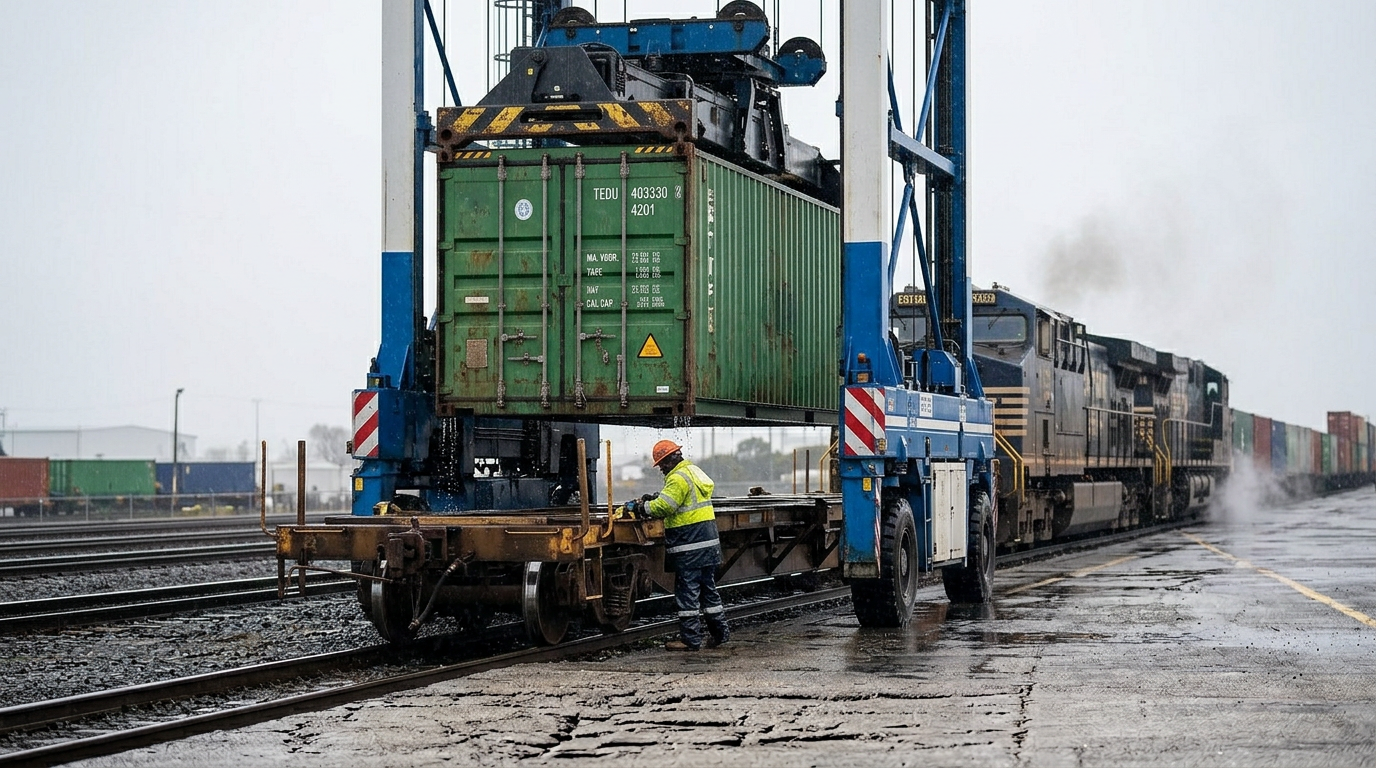
1) China reports 5% first-quarter growth, with exports and industrial output carrying momentum
Financial Times’ world feed and The New York Times business coverage both highlighted China’s first-quarter GDP print at 5%, a result that landed above many market-side expectations and immediately reset the tone of Asia trade discussions. The core detail across both reports is the composition: industrial activity and export performance provided the largest near-term support, while domestic demand signals remained mixed and property-linked pressures still visible. That blend matters for importers and manufacturers because it implies that outbound supply capacity remains active even as internal consumption recovery stays uneven.
The New York Times emphasized state-backed infrastructure spending as a key stabilizer, while FT’s summary pointed to exports and fiscal stimulus as offsets to weak household-side momentum. For trade operators, this is less a “full-cycle rebound” signal and more a capacity-and-policy signal: factories tied to external orders may remain relatively resilient, and logistics volumes linked to infrastructure and industrial inputs may stay supported in the short run. At the same time, the persistence of housing and confidence headwinds suggests demand forecasting should still be handled with caution rather than extrapolating one quarter’s headline growth into a uniform recovery story.
2) Equity markets pushed higher as investors priced in a lower immediate war-risk premium
The New York Times business front and Financial Times market reporting both described a strong risk-asset move, with U.S. equities reaching fresh highs and the S&P 500 clearing the 7,000 level in session coverage. The directional driver in both accounts was a shift in investor assumptions: participants increasingly treated a near-term de-escalation path in the latest U.S.-Iran crisis cycle as plausible, even though final diplomatic outcomes were not yet settled in official terms. This pattern produced a broad rebound in sentiment after prior conflict-driven volatility.
Reuters market pages in the same window showed commodities and rates still moving in mixed fashion, underscoring that the market move is not a clean “all-clear” signal but a repricing of immediate tail risk. For cross-border trade teams, that distinction is important. Freight contracts, energy-linked procurement, and currency hedging decisions often react to volatility clusters rather than final peace agreements. In practical terms, companies should read this rally as a temporary easing in stress indicators, not proof that routing, insurance, or input-cost risk has disappeared. The operational implication is to keep contingency assumptions live while taking advantage of any short-lived normalization in pricing.
3) Governments and businesses signal a prolonged energy-cost management phase
Financial Times coverage indicated that UK business groups are pressing for additional action on energy bills, even as ministers moved with a reported £600 million support scheme. In parallel, NYT business reporting flagged broader concern about rising emergency fiscal outlays in multiple economies, with policymakers balancing short-term household and business protection against debt and inflation constraints. Together, these reports point to a policy environment where governments are still in mitigation mode rather than normalization mode.
For importers, exporters, and manufacturers, this matters because energy policy and fiscal support now feed directly into pricing power and competitiveness. If support remains targeted and temporary, energy-intensive sectors may still face margin compression; if support broadens, public-finance pressure can re-enter through bond markets and currency channels. The current factual pattern across coverage is not one of a synchronized response but of layered national interventions with different intensity and timing. That fragmentation can create basis risk in cross-border supply chains, especially for firms running multi-country production and distribution networks. In short: energy exposure remains a first-order trade variable, and policy design is becoming as important as commodity direction.
4) Japan’s expected arms-export easing reflects a wider restructuring of security supply chains
Reuters reported strong external interest in Japan’s planned easing of arms-export rules, citing demand signals from countries including Poland and the Philippines. The report framed the shift against a backdrop of strained U.S. weapons supply capacity and overlapping conflicts, suggesting allies are preparing for a more diversified procurement map. While this is defense policy news on the surface, the trade relevance is clear: export-control boundaries, dual-use component flows, and industrial capacity allocation are increasingly interconnected.
As procurement channels widen, upstream manufacturing ecosystems—from advanced metals and electronics to specialized logistics—can see knock-on demand shifts. At the same time, compliance complexity usually rises when security-sensitive categories expand across jurisdictions with different licensing standards. For businesses exposed to high-spec components, this can translate into longer lead-time planning cycles and stricter documentation requirements. Reuters’ reporting window does not indicate a fully implemented new regime yet, but it does indicate active buyer interest and policy momentum. The practical takeaway for trade operators is to watch not only formal rule changes but also early contracting behavior, which often signals how quickly industrial reallocation will materialize.
5) Development lenders launch a large-scale water initiative with infrastructure and trade implications
Reuters reported that the World Bank and partner development institutions launched a global “Water Forward” initiative aimed at improving secure water access for one billion people within four years. Although positioned as a development program, the scale and timeline make it relevant to trade and industry planning, particularly in regions where water reliability constrains agriculture, light manufacturing, and urban logistics. Large financing programs of this type often influence project pipelines, import demand for equipment, and procurement schedules for engineering services.
In the near term, the commercial effect is usually indirect: planning, tendering, and standards alignment precede visible cargo flows. Over a medium horizon, however, water-infrastructure acceleration can materially affect production continuity in drought-prone or rapidly urbanizing markets, which in turn affects sourcing strategy and risk-adjusted supplier selection. Reuters’ report focused on target scale and institutional coordination rather than project-by-project detail, so execution certainty will depend on country-level implementation. Still, for global operators, the announcement is a reminder that climate-adaptation infrastructure is becoming part of mainstream trade planning, not a peripheral sustainability narrative.
What to watch next
Over the next two to three days, the key test is whether headline optimism turns into execution stability: sustained shipping reliability, steadier energy inputs, and consistent policy messaging. Watch for follow-through on China demand composition, any change in Gulf risk language, and whether emergency energy support expands beyond initial packages. If those signals diverge, markets may stay resilient while real-economy trade costs remain volatile.