
April 24, 2026 | Iran’s post-Khamenei leadership shift reshapes regional risk pricing; Lebanon cease-fire extension steadies near-term corridor planning; diesel supply stress broadens trade-cost pressure
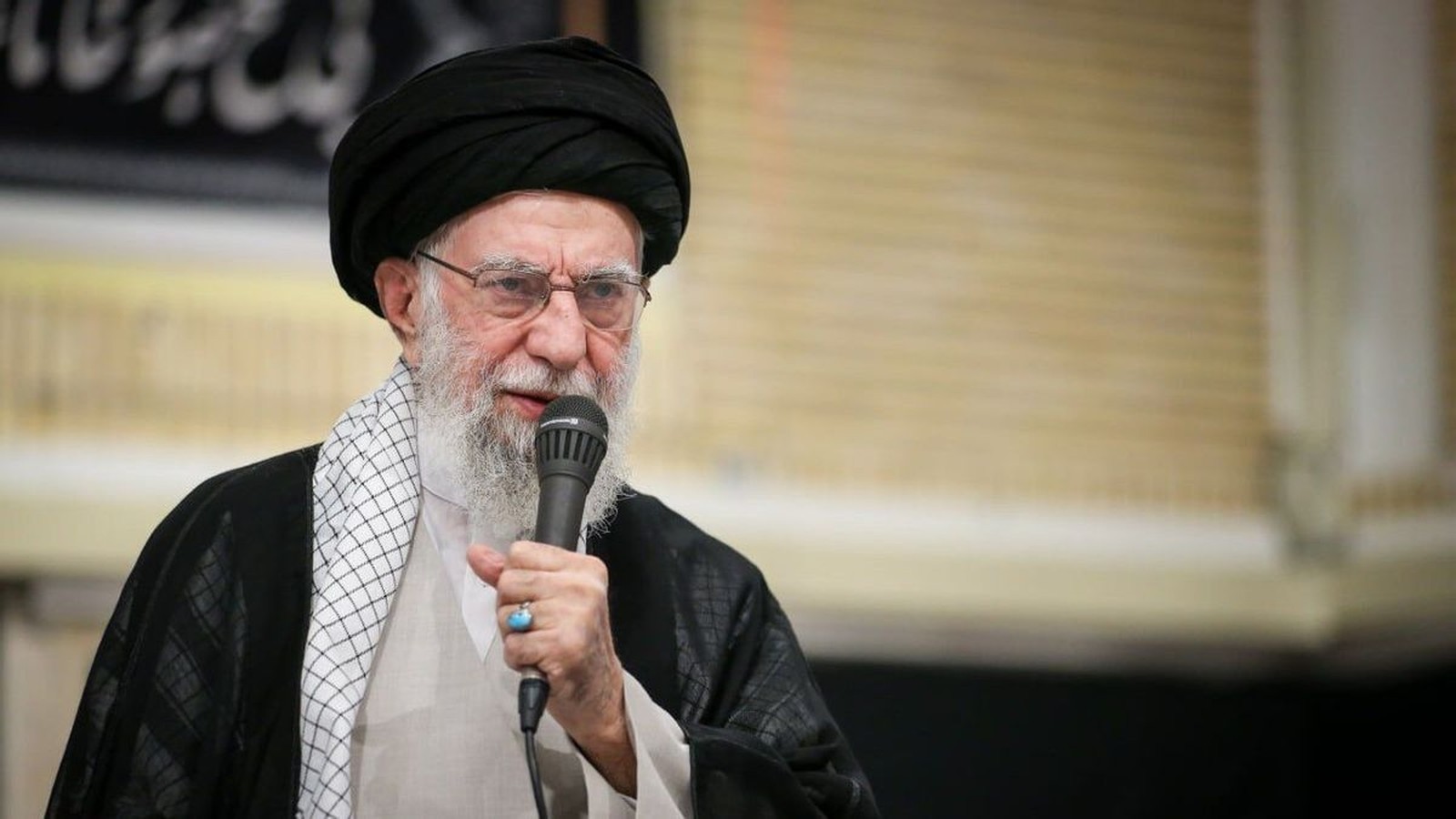
1) Iran entered a new leadership phase after Ayatollah Ali Khamenei’s killing, increasing uncertainty around regional policy execution
Reporting streams led by The New York Times described a structural shift in Iran’s power balance after the killing of Ayatollah Ali Khamenei, with the Revolutionary Guards gaining larger practical influence in day-to-day state direction. For trade operators, the key issue is not only headline geopolitics but policy predictability: changes in leadership architecture can alter how quickly security, customs, maritime, and sanctions-adjacent decisions are made and enforced.
In corridor-risk terms, markets typically react to governance transitions by adding a premium to insurance assumptions, bunker planning, and delivery-window confidence—especially for cargo with Gulf exposure. Even when no formal route closure is announced, chartering and procurement teams tend to increase contingency buffers until command chains appear stable. This leadership shift therefore matters as a planning variable: companies moving energy-intensive inputs, chemicals, or time-sensitive industrial components are likely to keep higher scheduling slack and wider cost ranges in near-term execution models.
2) U.S.-announced extension of the Israel-Lebanon cease-fire reduced immediate escalation risk but left a fragile operating backdrop
According to NYT live updates, President Trump said Israel and Lebanon agreed to extend the cease-fire for an additional three weeks. In market practice, cease-fire extensions typically improve short-horizon confidence for routing and inventory timing because they reduce the probability of sudden spillover events that can affect insurance pricing and vessel behavior. The extension was therefore read as a stabilizing signal for immediate planning, particularly for businesses exposed to Eastern Mediterranean and broader regional flows.
Still, the operational takeaway is conditional stability rather than full normalization. Freight and procurement teams generally treat temporary extensions as “improved but reversible” conditions, meaning they may release some emergency buffers while keeping fallback options active. The situation supports tactical adjustments—such as moderate tightening of lead-time assumptions—without fully unwinding risk controls built during recent volatility. For importers and exporters, the right posture remains flexibility-first: exploit calmer windows, but retain alternate lane and supplier options in case diplomacy stalls.
3) Europe’s €106 billion Ukraine package signaled a longer conflict horizon, reinforcing medium-term defense and commodity demand effects
NYT coverage highlighted a new European Union package of roughly $106 billion for Ukraine, with heavy weighting toward military spending. This matters to trade because large defense-oriented public spending programs influence procurement priorities, industrial allocation, and cross-border demand for metals, electronics, machinery, and logistics services over multi-quarter horizons. The package also signals that policymakers are budgeting for endurance rather than a near-term settlement.
For businesses, the implication is less about one-week volatility and more about sustained reallocation pressure. When conflict duration expectations lengthen, freight capacity, insurance appetite, and manufacturing slots can remain skewed toward strategic sectors, affecting availability and cost in commercial categories. Exporters serving Europe may also see more divergence between resilient public-backed demand pockets and weaker discretionary consumption channels. The package therefore adds another data point to the “prolonged-friction” baseline that many global operators are now using for 2026 planning.
4) Diesel supply disruption became a broader inflation and logistics risk, with freight-sensitive sectors under renewed margin pressure
NYT business reporting emphasized that the Iran war has disrupted diesel supply more severely than gasoline in several markets. For trade execution, diesel is a core input across trucking, heavy equipment, warehousing support operations, and inland transfer, so its availability and pricing feed directly into landed-cost variance. Unlike headline oil benchmarks alone, diesel stress is often felt quickly in contract renegotiations, surcharges, and route-level service economics.
The practical effect for importers and distributors is a second-order cost wave: even where ocean freight rates remain manageable, inland legs and last-mile industrial movement can absorb new volatility. Procurement teams are therefore likely to review transport clauses, fuel surcharge formulas, and delivery commitment language with greater care. In categories with tight margins, diesel-led cost drift may also push order batching behavior and inventory timing changes as firms try to reduce the frequency of high-cost replenishment runs.
5) Consumer-goods supply chains showed pass-through pressure as major manufacturers warned of war-linked raw-material and chemical strain
NYT world coverage reported that the world’s largest condom producer plans price increases of up to 30%, citing raw-material and chemical constraints tied to the Iran conflict. While the product category is specific, the signal is broadly trade-relevant: when upstream petrochemical and specialty-input channels tighten, manufacturers often move from temporary absorption to explicit pass-through pricing.
For operators across packaged goods, healthcare consumables, and industrial materials, this is a reminder that conflict-related pressure can move through non-obvious supply chains. The shift from isolated shortage narrative to announced pricing action suggests that some producers now see disruption as durable enough to reprice contracts. Buyers should expect more frequent supplier notices on input volatility and should revisit safety-stock assumptions where substitution options are limited.
What to watch next
Watch four indicators over the coming days: whether leadership consolidation in Iran produces clearer policy signaling; whether the Israel-Lebanon cease-fire extension holds without new incidents; diesel crack and freight surcharge behavior across major lanes; and additional manufacturer pass-through announcements tied to petrochemical inputs. If these indicators worsen together, expect another step-up in landed-cost uncertainty and lead-time variability.