
May 11, 2026 | China-bound and U.S.-bound shipping resets intensify; tariff legality fight deepens; dollar and oil rise on Gulf tensions
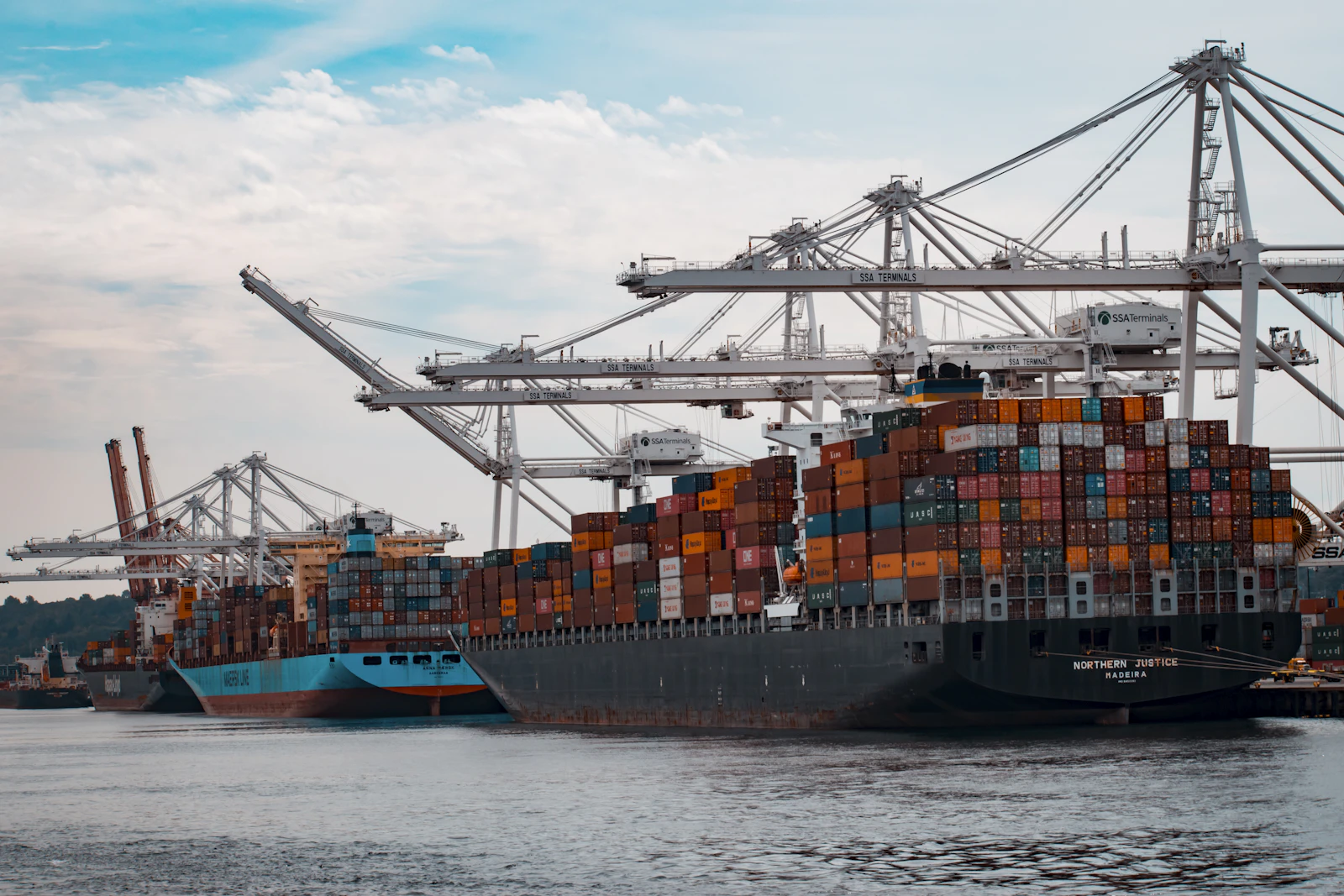
1) Container carriers are cutting Asia-U.S. services as tariff pressure starts showing up directly in vessel deployment
Reuters reported on May 9 that major container lines have suspended at least six scheduled weekly services between China and the United States as trade volumes weaken under the latest round of U.S. tariffs on Chinese goods. According to maritime consultants cited by Reuters, the affected services together represent capacity for more than 25,000 forty-foot containers each week. The changes involve major operators including MSC, Zim and members of the Ocean Alliance, and they span West Coast, East Coast and Gulf Coast gateways.
The significance is that this is no longer only a policy story or a sentiment story. It is now showing up in hard operating decisions such as blank sailings, route withdrawals and vessel-size adjustments. Reuters noted that some carriers that have not formally suspended services are still swapping in smaller ships after booking demand weakened. That means importers are moving into a market where fewer sailings, more selective capacity management and less predictable scheduling could become normal even without a full collapse in trade. For shippers, the practical consequence is a more fragile planning environment: transit options narrow, allocation decisions become more tactical, and ocean capacity starts to reflect tariff damage before customs data fully catches up. It is one of the clearest near-term indicators that tariff friction is feeding through to physical trade flows.
2) The U.S. tariff fight has shifted from policy rollout to legal and administrative uncertainty, with importers still watching refund execution closely
Coverage from Bloomberg and The New York Times over the past several days has highlighted a new phase in the U.S. tariff story: the core blanket 10% duty has been challenged in court, while businesses are still trying to understand how refund and replacement mechanisms will work in practice. The New York Times summarized the latest tariff timeline after a federal trade court ruled that a central part of the administration’s import-tax strategy exceeded statutory authority. Bloomberg separately reported that the first tariff-refund payments were expected around May 11, even as a meaningful share of entries had already run into problems in the claims process.
For companies moving goods through U.S. customs, that combination matters almost as much as the headline tariff rate itself. A legally contested tariff schedule can alter sourcing economics, but a slow or error-prone refund portal can create its own cash-flow strain. Importers therefore face two overlapping questions: which duties are durable enough to price into contracts, and how quickly any relief can actually be recovered from customs systems. The result is an operating environment in which procurement teams, customs brokers and finance teams all need to watch the same issue from different angles. Even if the policy direction becomes clearer later, the present disruption comes from uncertainty over timing, process and enforceability rather than from a single clean tariff announcement.
3) China’s April export rebound suggests manufacturers are still pushing shipments through despite the trade-policy overhang
Reuters reported that China’s exports rose 14.1% in April from a year earlier in dollar terms, a sharp acceleration from March and stronger than economists had expected. The data arrived just ahead of another round of high-level U.S.-China contact and stood out because it suggested Chinese factories were still shipping aggressively despite months of tariff confrontation and supply-chain uncertainty. Reuters linked part of the strength to demand tied to artificial-intelligence equipment and to front-loaded production activity.
The export figures do not mean trade friction has disappeared. Instead, they show that manufacturers and buyers are still finding ways to move goods before policy windows narrow further. In practice, this can happen when companies accelerate shipments, redirect routing, or prioritize categories with still-viable demand. For global operators, the number matters because it complicates the simple narrative of a one-way trade slump. Some corridors are clearly weakening, as seen in container-service withdrawals, yet Chinese export momentum has not fully rolled over. That split matters for anyone interpreting demand signals from ports, customs declarations or factory orders. It suggests that 2026 trade conditions remain uneven rather than uniformly weak, and that companies should expect more divergence across product classes, destination markets and compliance-sensitive sectors.
4) U.S.-China talks on tariffs and critical minerals are back in focus, with rare-earth supply concerns still embedded in the negotiating picture
Reuters reported over the weekend that U.S. and Chinese officials were meeting in Switzerland as Washington signaled that the current tariff levels on Chinese goods were unlikely to remain at their highest settings indefinitely. Separate Reuters reporting also indicated that a rare-earths arrangement between the two sides was still considered in effect by a U.S. official ahead of further leader-level discussions. That matters because the trade relationship is no longer centered only on customs duties; it now runs through critical minerals, advanced technology controls and industrial input security.
The current signal from both sides appears mixed but meaningful. On the one hand, officials are keeping channels open and acknowledging that the most punitive tariff levels are difficult to sustain commercially. On the other hand, neither government is giving up leverage tied to strategic materials or technology ecosystems. For importers and manufacturers, rare earths are not a niche policy issue: they feed directly into electronics, EVs, machinery, magnets and defense-linked supply chains. When tariff negotiations and critical-minerals arrangements move together, companies cannot treat trade diplomacy as a narrow pricing question. They also have to consider allocation risk, licensing exposure and the possibility that non-tariff controls become the more important constraint even if headline duties eventually ease.
5) Gulf tensions pushed oil and the dollar higher again, keeping shipping and input-cost risk alive even without a formal trade closure
Reuters reported on May 11 that the dollar strengthened in early Asia trading while oil prices jumped after President Donald Trump rejected Iran’s response to a U.S. peace proposal. Brent crude rose above $104 a barrel as hopes for a quick diplomatic breakthrough faded. Reuters framed the move as part of a broader reaction to the fragility of the U.S.-Iran ceasefire and to the continuing uncertainty around the Strait of Hormuz, a corridor that remains central to energy and maritime flows.
The immediate point for trade operators is that corridor stress does not need a full shutdown to affect landed cost and planning assumptions. When crude rises and the dollar firms at the same time, importers can face a double hit through fuel-related freight pressure and currency translation effects. The Reuters report also showed how quickly macro markets reprice around Gulf headlines, which means freight, insurance and procurement teams may need to react before any shipping advisory formally changes. This keeps the Middle East in the trade-risk picture even during weeks when tariff news dominates. For businesses exposed to energy-intensive production, petrochemicals or time-sensitive routes that depend on Gulf-linked shipping stability, the message is that geopolitical risk is still moving in parallel with tariff risk rather than replacing it.
What to watch next
Watch three near-term signals: whether more carriers cut trans-Pacific capacity after the latest service withdrawals; whether U.S. tariff litigation and refund processing produce clearer customs guidance; and whether U.S.-China talks yield any concrete movement on tariffs or rare-earth access. Also watch oil, the dollar and marine-risk pricing for signs that Gulf tensions are starting to bleed more directly into freight contracts and sourcing budgets.