
May 12, 2026 | U.S. tariff appeal keeps import uncertainty high; WTO warns on 2026 goods trade; shipping rates jump on trans-Pacific restocking
1) The U.S. tariff story has moved into a new legal phase, but importers are still being asked to operate as if the duties remain in force
Bloomberg reported on May 11 that the Trump administration asked a U.S. court to let it keep collecting the latest round of tariffs after a trade-court ruling found the president’s new 10% global tariff unlawful. At the same time, The New York Times’ latest tariff tracker showed that a broad patchwork of duties remains active across countries and sectors even after the legal setback. In practice, that means companies are dealing with two realities at once: a key legal challenge to the tariff regime, and a customs environment in which many of the charges still shape pricing, landed-cost assumptions and sourcing decisions.
The immediate consequence is not clarity but suspended uncertainty. Importers cannot simply assume the duties are gone, because the administration is still trying to preserve collection authority during the appeal. They also cannot treat the current framework as settled, because court action has already shown that the legal basis for part of the regime is vulnerable. For trade operators, this is one of the most disruptive combinations possible: policy still bites, but policy durability is in question. Procurement, finance and customs teams therefore have to keep working with provisional numbers, provisional compliance assumptions and provisional timing. Even before any final appellate ruling arrives, that uncertainty alone can alter contract negotiations, inventory timing and customer pricing across cross-border supply chains.
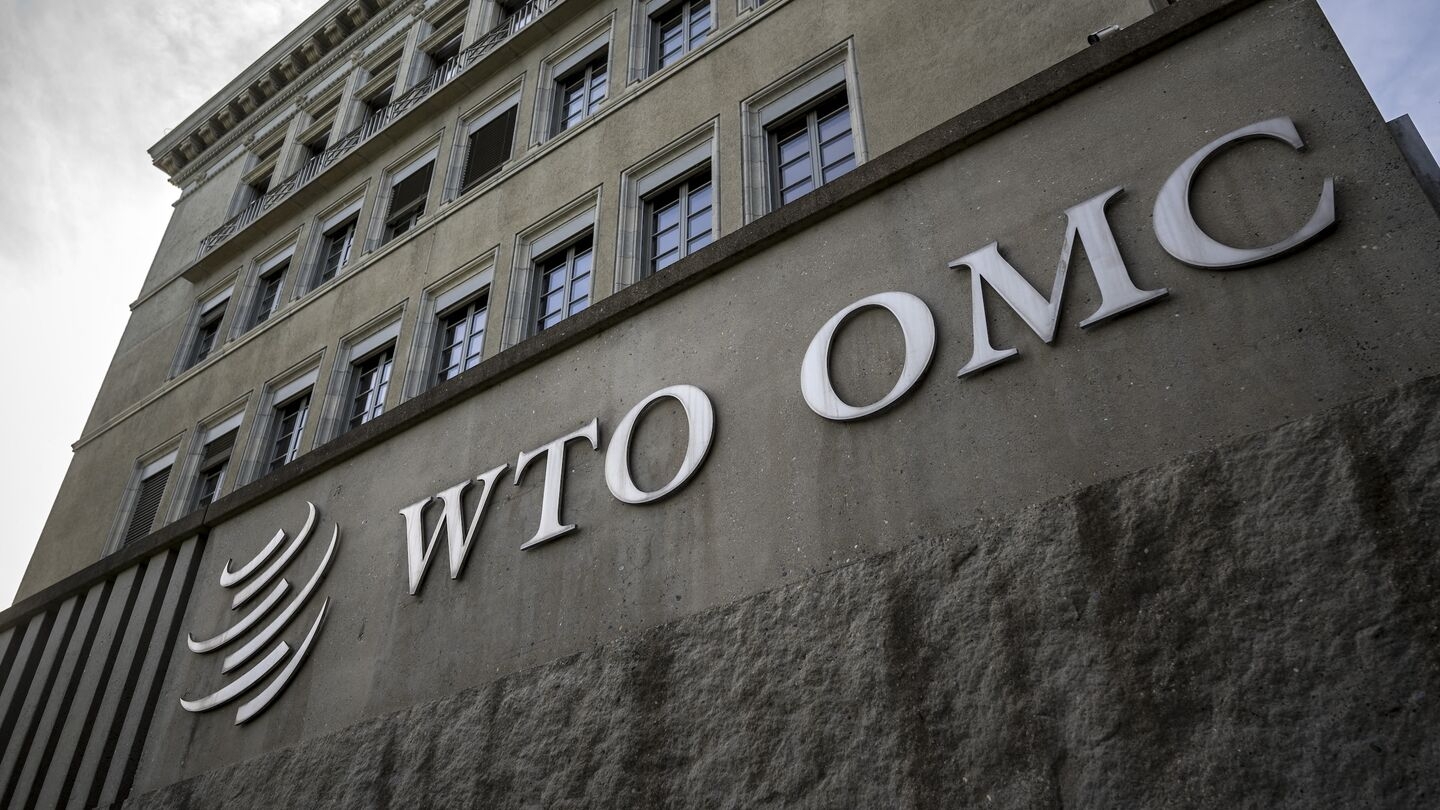
2) The WTO warning carried by the Financial Times suggests tariff escalation is no longer just a bilateral dispute but a broader drag on 2026 merchandise trade
The Financial Times reported that the World Trade Organization expects Donald Trump’s tariffs to cut into global goods-trade growth in 2026. The FT’s summary of the WTO view is important because it shifts the discussion away from isolated national tariff measures and toward system-level trade slowdown. In other words, the question is no longer only whether the United States and China can strike tactical pauses or reduce a particular tranche of duties. The bigger issue is whether repeated tariff shocks, retaliatory moves and uncertainty around future trade actions are now large enough to weaken the growth profile of global merchandise trade as a whole.
For exporters, importers and manufacturers, that kind of warning matters because it influences behavior before the full slowdown is visible in customs or port statistics. When the WTO signals weaker goods-trade momentum, companies tend to become more defensive in ordering, inventory exposure and capital allocation. Buyers may shorten visibility horizons, suppliers may hold tighter to margins, and logistics planning may become more tactical. The trade system can therefore cool not only because tariffs directly raise costs, but because uncertainty makes firms less willing to commit volume. The FT framing also reinforces that 2026 trade risk should not be read only through Washington headlines. Multilateral institutions are increasingly treating tariff policy as a genuine macro headwind for cross-border goods flows.
3) Shipping markets are reacting quickly to any temporary easing, with U.S.-bound freight rates rising as importers rush to restock
The Wall Street Journal reported that shipping rates have risen as a U.S.-China trade truce triggered a renewed import surge. According to the Journal’s description, businesses that had delayed orders under heavier tariff conditions moved quickly once duties were temporarily reduced, especially with back-to-school and holiday buying windows approaching. That kind of response is consistent with a market that no longer treats tariff changes as distant policy noise. Instead, importers are using even short reprieves to pull orders forward, secure vessel space and rebuild inventory while the cost window remains more favorable.
This matters because it shows how unstable the planning cycle has become. The same tariff system that suppresses volume during one phase can cause a compressed wave of bookings in the next if businesses believe relief may be short-lived. Freight markets then absorb that volatility directly through rate increases, vessel utilization pressure and tighter booking conditions. For trade operators, the important takeaway is that tariff easing does not necessarily bring calm. It can just as easily trigger a new form of disruption by concentrating demand into a shorter period. That means ocean freight, inland logistics and warehouse capacity all need to be watched alongside customs policy. A lower tariff headline can improve economics, but it can also restart the race for space.
4) Reuters’ review of the renewed U.S.-China trade war shows the conflict now runs through sanctions law, shipping diplomacy and technology controls—not tariffs alone
Reuters’ May 7 review of the current U.S.-China trade confrontation laid out how much the conflict has widened since Trump returned to office. The report noted that China invoked its anti-sanctions law after the United States blacklisted Chinese refiners linked to Iranian oil. Reuters also said U.S. officials were pressing Beijing to help persuade Iran to keep the Strait of Hormuz open to international shipping. In the same review, Reuters recapped newer U.S. Section 301 probes, Chinese countermeasure authority against what it calls discriminatory foreign actions, and Chinese consideration of export curbs on advanced solar-manufacturing equipment.
The practical lesson is that 2026 trade friction is no longer defined by a single customs-rate table. Sanctions exposure, energy-linked shipping corridors, industrial-equipment restrictions and reciprocal legal countermeasures are all part of the same operating environment. That creates a much broader compliance burden for companies exposed to China-linked supply chains. A buyer can be affected not only by direct tariffs, but also by sanctions-screening risk, rerouting pressure if Hormuz becomes unstable, or tighter access to strategic equipment and inputs. Reuters’ framing makes clear that trade policy and geopolitical policy are now converging more tightly than they did in earlier tariff cycles. For operators, the real risk is cumulative: each individual measure may be manageable, but together they make supply planning slower, more expensive and more politically sensitive.
5) Early trade-flow data are starting to show real economic strain, with Reuters noting imports at the busiest U.S. seaport fell sharply
Reuters’ latest tariffs coverage also highlighted a more concrete signal from the real economy: imports through the busiest U.S. seaport fell 11%. That kind of data point is important because it moves the discussion beyond rhetoric, court filings and policy trackers. Port throughput is one of the clearest early indicators that changes in tariff policy are filtering into actual shipping decisions. A meaningful decline at a top gateway suggests that some importers are delaying cargo, cutting purchase volumes, switching routes or pausing discretionary restocking while they reassess duty exposure and demand conditions.
For the market, that matters in two ways. First, it confirms that trade friction is affecting physical flows rather than sitting only in legal or political headlines. Second, it shows that the effects are uneven: some companies are rushing cargo when relief appears, while others are reducing volume when tariff risk or legal ambiguity rises. That push-pull pattern can produce unstable port demand, choppier shipping schedules and less reliable read-through from any single week of logistics data. Still, the 11% decline is an important warning sign. It suggests the tariff environment is already altering importer behavior in a measurable way, and that port, freight and customs data should now be treated as frontline indicators of how much damage or relief tariff policy is actually creating.
What to watch next
Watch whether the U.S. appeal succeeds in preserving tariff collection through the next legal phase, whether more institutions echo the WTO’s weaker 2026 trade outlook, and whether the recent freight-rate rebound broadens into wider logistics congestion. Also watch port import data and any new U.S.-China moves on sanctions, export controls or shipping security, because those may now move trade conditions as much as the tariff rates themselves.