
What Is CIF in International Trade? (And How It Differs from FOB)

Quick Answer: What Is CIF?
CIF means Cost, Insurance, and Freight. Under CIF, the seller arranges and pays for main sea transport and minimum marine insurance to the named destination port. The buyer still handles import customs, duties, and inland delivery after arrival.
A point many teams miss: even though the seller pays freight and insurance, risk transfer is tied to shipment under Incoterms rules. That is why document quality, insurance wording, and shipment evidence matter as much as the unit price.
Why CIF Is Popular
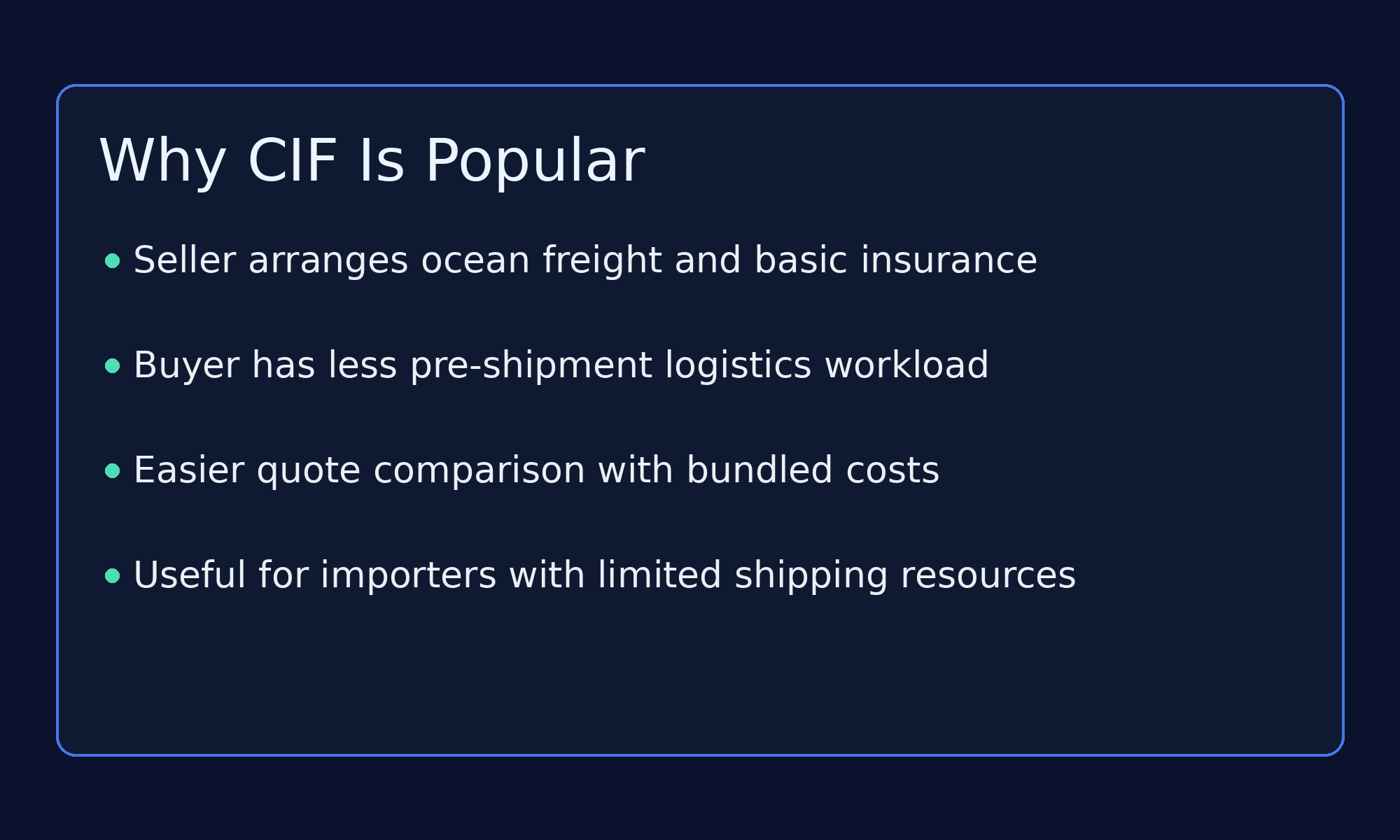
CIF is commonly used when buyers want a simpler purchase flow and prefer the seller to coordinate ocean freight and insurance. It is especially useful for importers who are newer to cross-border logistics or have limited freight management capacity in-house.
- Less operational burden for the buyer before cargo arrives.
- One bundled offer (goods + freight + basic insurance) that is easier to compare at quote stage.
- Clearer planning for landed-cost estimates at destination port level.
Seller Responsibilities Under CIF
In a standard CIF transaction, the seller is typically responsible for:
- Producing and packing goods according to contract.
- Completing export customs clearance.
- Booking sea freight to the named destination port.
- Paying the freight cost for that ocean leg.
- Purchasing marine insurance at agreed minimum coverage.
- Providing commercial invoice, transport document, and insurance certificate/policy.
The buyer, in turn, is responsible for import clearance, duties/taxes, terminal and destination charges (as applicable), and inland trucking after port arrival.
CIF vs FOB: Core Differences
| Topic | CIF | FOB |
|---|---|---|
| Ocean freight booking | Seller arranges | Buyer arranges |
| Marine insurance | Seller provides minimum cover | Buyer decides and buys |
| Quote structure | Freight + insurance included in sale price | Goods price separated from freight/insurance |
| Buyer control over logistics | Lower | Higher |
Which One Is Better?
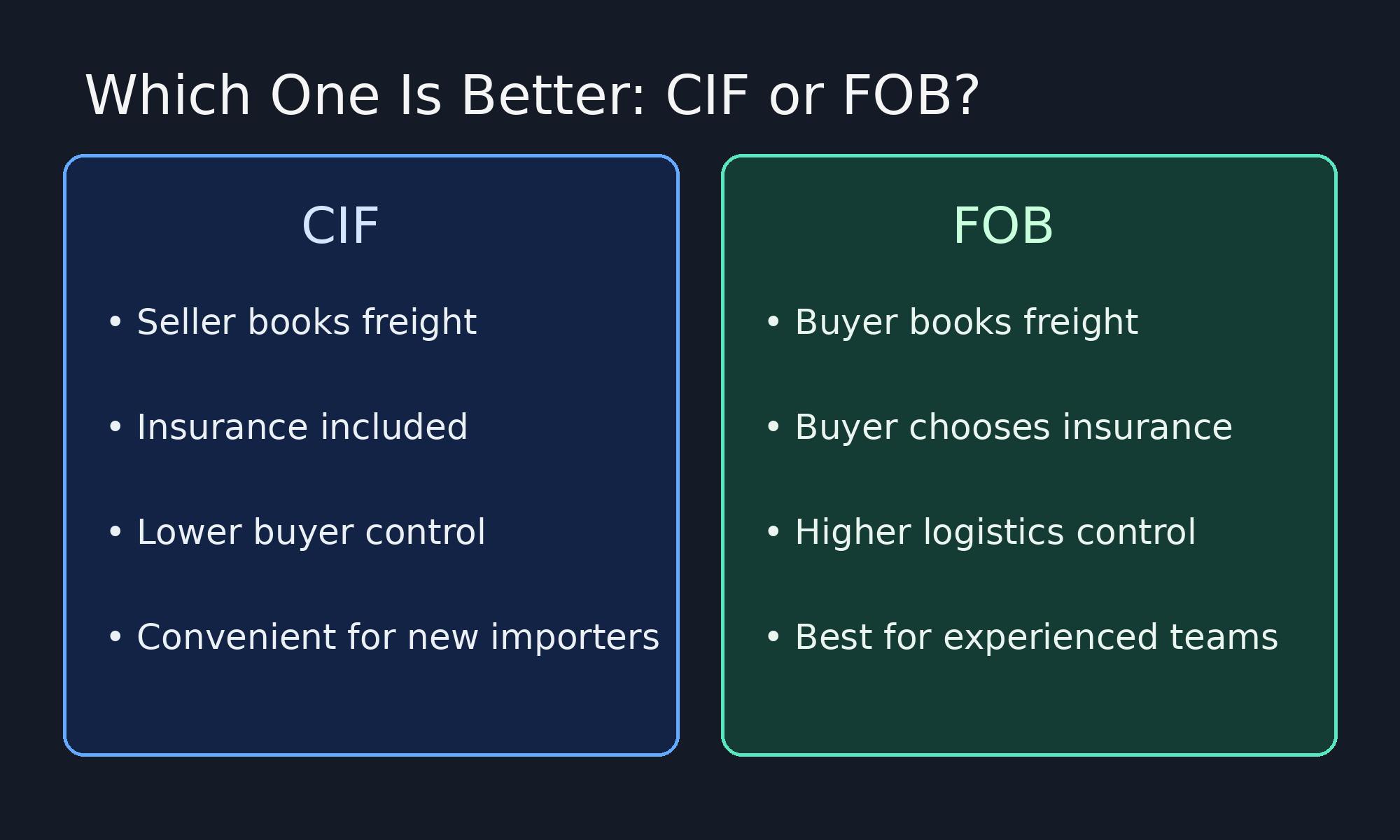
There is no universal “best” term. The better option depends on operational capability and cost visibility.
- Choose CIF if your priority is convenience and predictable seller-managed shipment setup.
- Choose FOB if your team can negotiate freight well and wants tighter control over routing, carrier, and insurance scope.
In practice, experienced import teams often test both models on similar SKUs and compare total landed cost, transit reliability, and claims experience over 1–2 quarters.
Common Mistakes to Avoid
- Assuming CIF means “all destination costs included” (it does not).
- Not checking the insurance clause and claim procedure in advance.
- Ignoring destination THC, documentation, and local handling charges in budgeting.
- Using Incoterms without naming the exact destination port in the contract.
Simple Decision Checklist
Before confirming CIF or FOB, align on these five questions:
- Who can secure better freight rates this season?
- Who can manage shipment exceptions faster?
- Do you need broader insurance than minimum cover?
- Is your landed-cost model detailed enough for destination charges?
- Do contract terms clearly define documents and risk-transfer points?
References
Final takeaway: CIF is a solid option when buyers want lower logistics complexity, while FOB is stronger for teams optimizing freight control and total cost transparency. The right choice is the one your team can execute with fewer surprises.