
Colombia Imports Report — January 2026 (English Rewrite)

Executive Summary
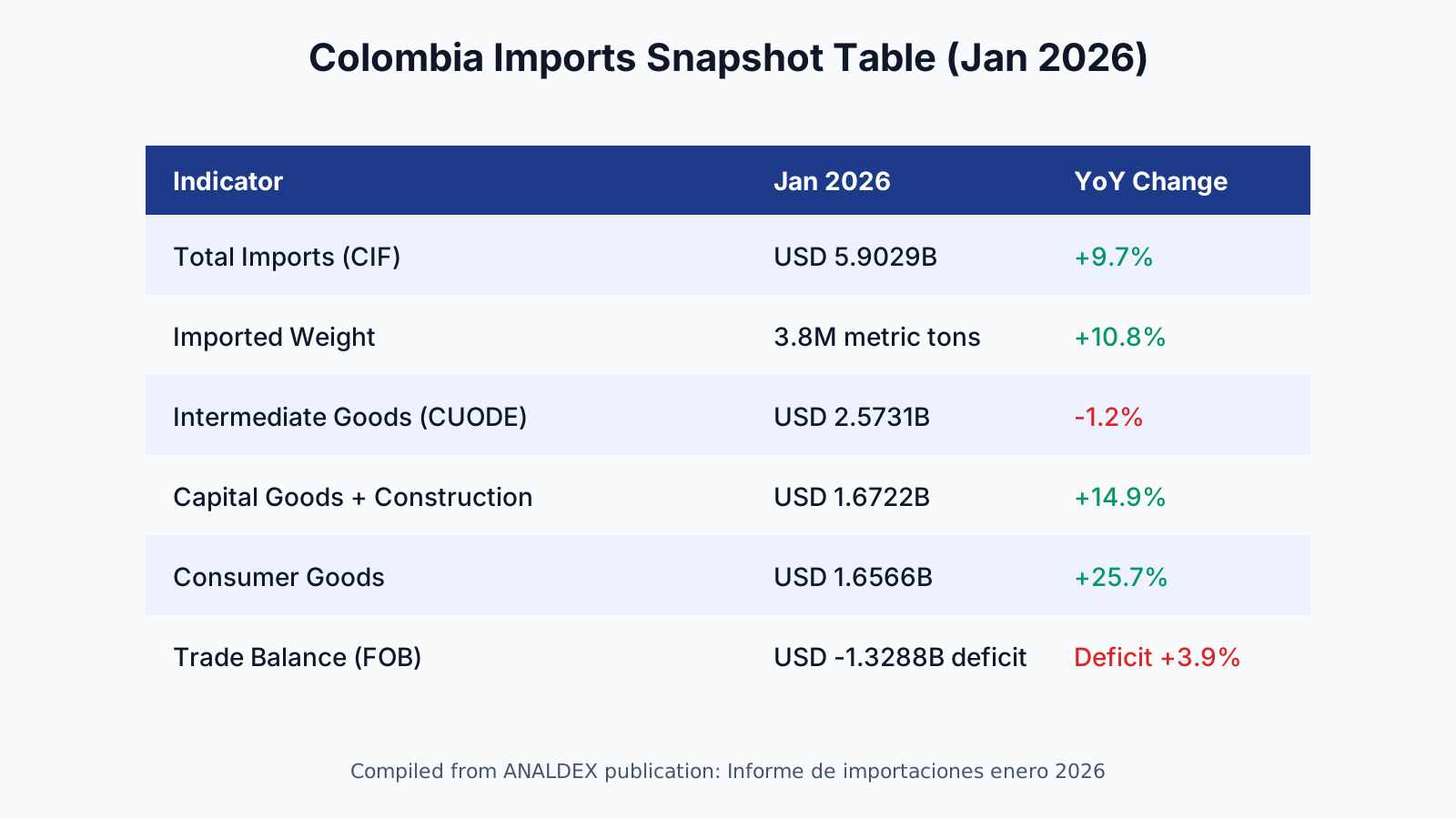
Colombia’s import performance in January 2026 showed broad-based expansion in value and volume, with clear evidence of demand recovery in several manufactured and consumer categories. Total imports reached USD 5.9029 billion (CIF), up 9.7% year-on-year, while imported weight increased to 3.8 million metric tons, up 10.8%. The data indicates a stronger physical flow of goods than in the same month of 2025, with notable weight growth in cereals, food-industry residues, and iron/steel categories.
From a structure perspective, imports remained heavily concentrated in manufactures (77.7%), followed by agri-food-beverage products (14.9%), and fuel/extractive products (7.3%). In parallel, the trade balance remained negative, with a January goods deficit of USD FOB -1.3288 billion, 3.9% wider than the previous year. Together, these signals suggest that domestic demand and investment appetite are improving, but external dependency and structural competitiveness challenges remain.
1) Headline Import Performance
January 2026 opened with a clear expansion in import activity. A near double-digit growth rate in CIF value (+9.7%) combined with two-digit growth in physical volume (+10.8%) points to more than inflation effects alone. This matters for market watchers because value-only growth can be driven by price; in this case, increased tonnage confirms stronger real goods movement.
The strongest contributors to value growth included road vehicles (+70.4%), medicinal and pharmaceutical products (+16.4%), and cereals/cereal preparations (+24.1%). These three areas together contributed a major share of the aggregate increase. Operationally, this mix indicates parallel growth in household demand (consumer mobility and health), industrial supply chains, and food security-related imports.
2) Import Composition by Product Group (Expanded Analysis)
Product-group concentration remained high. Manufactured goods represented over three quarters of total import value. This is not just a descriptive statistic—it is the core structural signal in the January dataset. When one product family dominates import value at this scale, external shocks such as currency depreciation, freight volatility, and supplier-country disruption can transmit quickly into domestic cost structures across retail, industry, and services.
- Manufactures: 77.7% share, with strong growth in road vehicles and selected industrial categories.
- Agri-food-beverage: 14.9% share, supported by cereal demand and selected commodity-related purchases.
- Fuel/extractive: 7.3% share, with visible contraction in petroleum-related imports.
- Others: marginal share (0.1%).
The composition tells a layered story. First, the manufacturing-heavy basket implies Colombia’s import demand in early 2026 was driven less by one-off commodity swings and more by broad supply-chain and consumption dynamics. Second, agri-food growth at meaningful share indicates that food security and domestic transformation demand remained active, not merely stable. Third, the lower fuel/extractive share reflects both category-specific contraction and a relative shift of import growth toward goods tied to final consumption and productive investment.
For businesses, this structure has direct planning implications. Importers exposed to manufacturing-linked goods should prioritize FX sensitivity analysis, supplier concentration review, and lane resilience planning. For policymakers, the pattern reinforces a familiar challenge: short-term growth can be supported by import-intensive demand, but medium-term external-balance pressure may persist unless domestic value-added capacity expands in parallel.
In practical terms, “manufactures at 77.7%” should be interpreted as a risk-and-opportunity signal. It points to strong demand momentum and activity, while also highlighting where competitiveness and substitution strategy matter most over the next two to four quarters.
3) Category Dynamics: Expansion and Contraction
The report shows not all sectors moved in the same direction. Agri-food imports grew +13.2%, fuel and extractive products fell -25.3%, and manufactures rose +14.1%. Such divergence is meaningful: it often reflects both demand-side substitution and price-cycle differences across global commodity and industrial markets.
In agri-food, cereal-related purchasing remained a growth engine. In fuel, petroleum-related reductions drove overall decline. In manufactures, road vehicle growth was the single largest positive signal. The combined pattern implies stronger private-sector activity but also potential vulnerability to changes in global shipping and automotive supply conditions.
4) CUODE View: Economic Use of Imports
CUODE segmentation provides a practical lens into the real economy:
- Intermediate goods: USD 2.5731B, -1.2% YoY (dragged by fuel and some agricultural inputs).
- Capital goods + construction: USD 1.6722B, +14.9% YoY (notably transport equipment and office machinery).
- Consumer goods: USD 1.6566B, +25.7% YoY (durables especially strong).
The key macro reading is that investment-linked and consumption-linked imports both expanded, while intermediate goods were slightly weaker. This may indicate short-term demand momentum with uneven industrial replenishment.
5) Customs Entry Structure
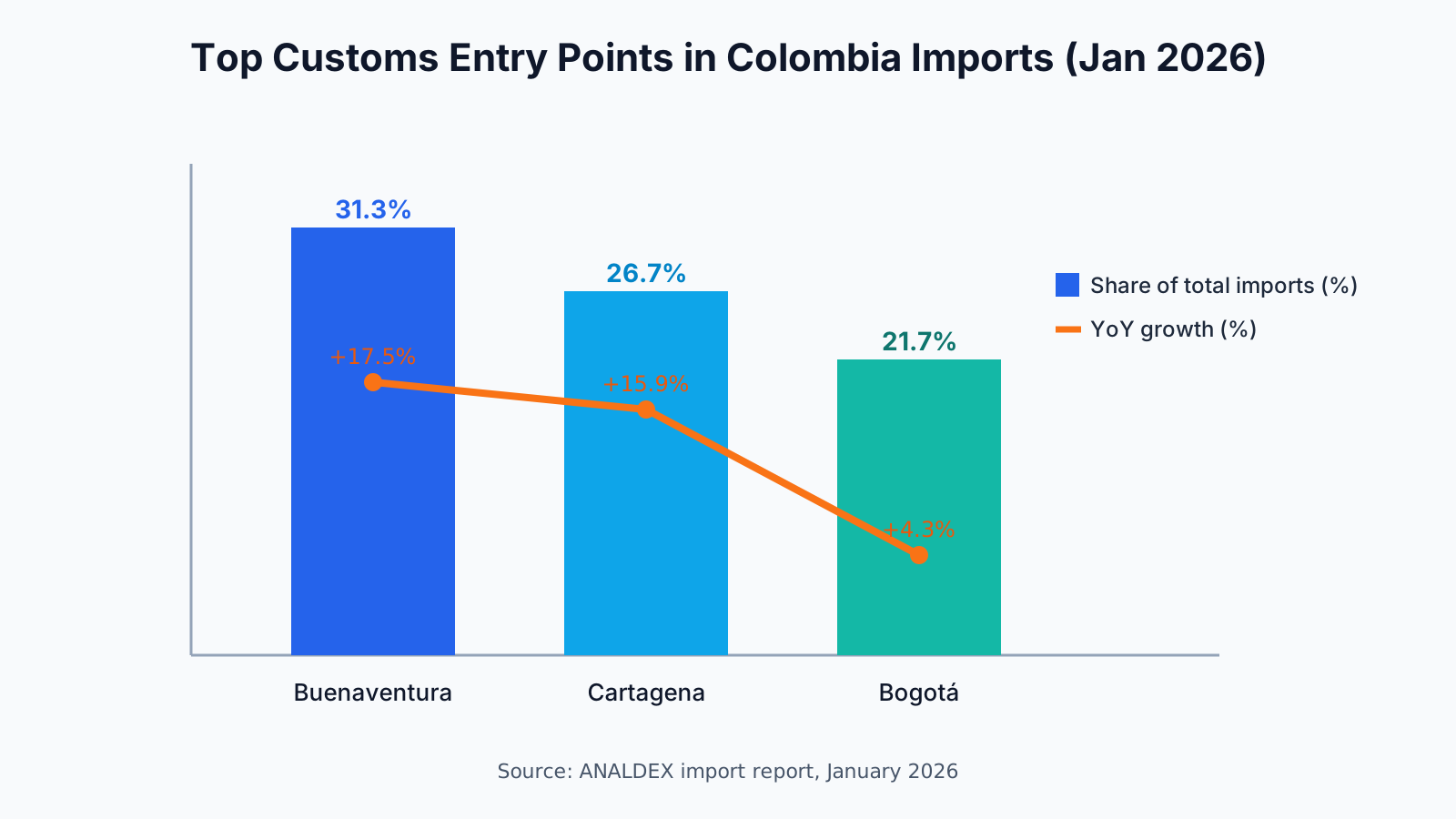
Import concentration by customs office remained high:
- Buenaventura: 31.3% share, +17.5% YoY
- Cartagena: 26.7% share, +15.9% YoY
- Bogotá: 21.7% share, +4.3% YoY
The chart shows two simultaneous signals: high concentration and uneven growth speed. Buenaventura and Cartagena both posted strong double-digit expansion, confirming that maritime gateways remained the main engines of import scaling in January. Bogotá, while still a major entry node, expanded more moderately. This gap suggests that import momentum was led by seaport-linked flows rather than by air/capital-region channels.
Operationally, this structure creates both efficiency and fragility. Concentration in top gateways can lower unit handling cost through scale, but it also increases exposure to port congestion, labor disruption, weather shocks, and clearance bottlenecks. If one high-share node underperforms, network-wide delay risk rises quickly. For import operators, the right response is not automatic decentralization, but active contingency planning: alternate routing options, pre-cleared documentation discipline, and carrier-slot diversification for high-priority categories.
From a policy angle, the pattern supports targeted infrastructure and process upgrades at top entry points. Marginal improvements in throughput reliability at high-share gateways can have outsized national trade impact compared with equivalent improvements in low-volume nodes.
6) Destination Departments and Domestic Absorption
By destination department, Bogotá led with 49.2% of national import value and +12.1% YoY growth. Antioquia followed with 13.9% share (+6.7%), and Valle del Cauca ranked third at 9.5% (+22.4%). This confirms that import absorption remains concentrated in core economic hubs while secondary growth is gaining speed in selected industrial/commercial regions.
7) Origin Countries: Strategic Supplier Mapping
Country-of-origin structure remains a key strategic signal:
- China: 30.9% share, USD 1.8295B, +19.7% YoY
- United States: 21.0% share, USD 1.2409B, -7.1% YoY
- Mexico: 4.67% share, USD 276.0M, +16.0% YoY
The share increase from China (+2.6 percentage points) combined with a lower US share (-3.8 points) suggests ongoing rebalancing in supplier dependence. For importers, this implies a need for lane diversification and category-specific resilience planning.
8) Trade Balance Implications
Colombia’s goods trade balance in January 2026 remained in deficit at USD FOB -1.3288B, compared with -1.2789B in January 2025. The wider deficit (+3.9%) reflects sustained external demand for imported goods and the current composition of domestic production and consumption.
Largest bilateral deficits were registered with China, Mexico, Germany, and Brazil, while positive balances were recorded with Panama, the United States, Venezuela, and Ecuador. This mixed bilateral pattern shows that aggregate deficit dynamics coexist with selective surplus corridors.
9) Conclusion
January 2026 import data shows Colombia entering the year with expanding import momentum, strong manufactured-goods demand, visible consumer and capital-goods acceleration, and persistent trade-deficit pressure. For businesses, the main opportunity lies in data-driven supplier and lane strategies. For analysts and policymakers, the key challenge remains balancing growth-supportive imports with medium-term competitiveness and external balance resilience.
Source
Based on and rewritten from: ANALDEX — Informe de importaciones enero 2026